Lightboxes are modular programmable light sculptures. They are an artistic and philosophical exploration of the convergence between senses, contemplation, interactivity, and theatricality/musicality. Lightboxes are pieces unto themselves, as well as studies for a broader range of forms and sculptures referred to as Lightforms, which build on the design and motifs of Lightboxes.
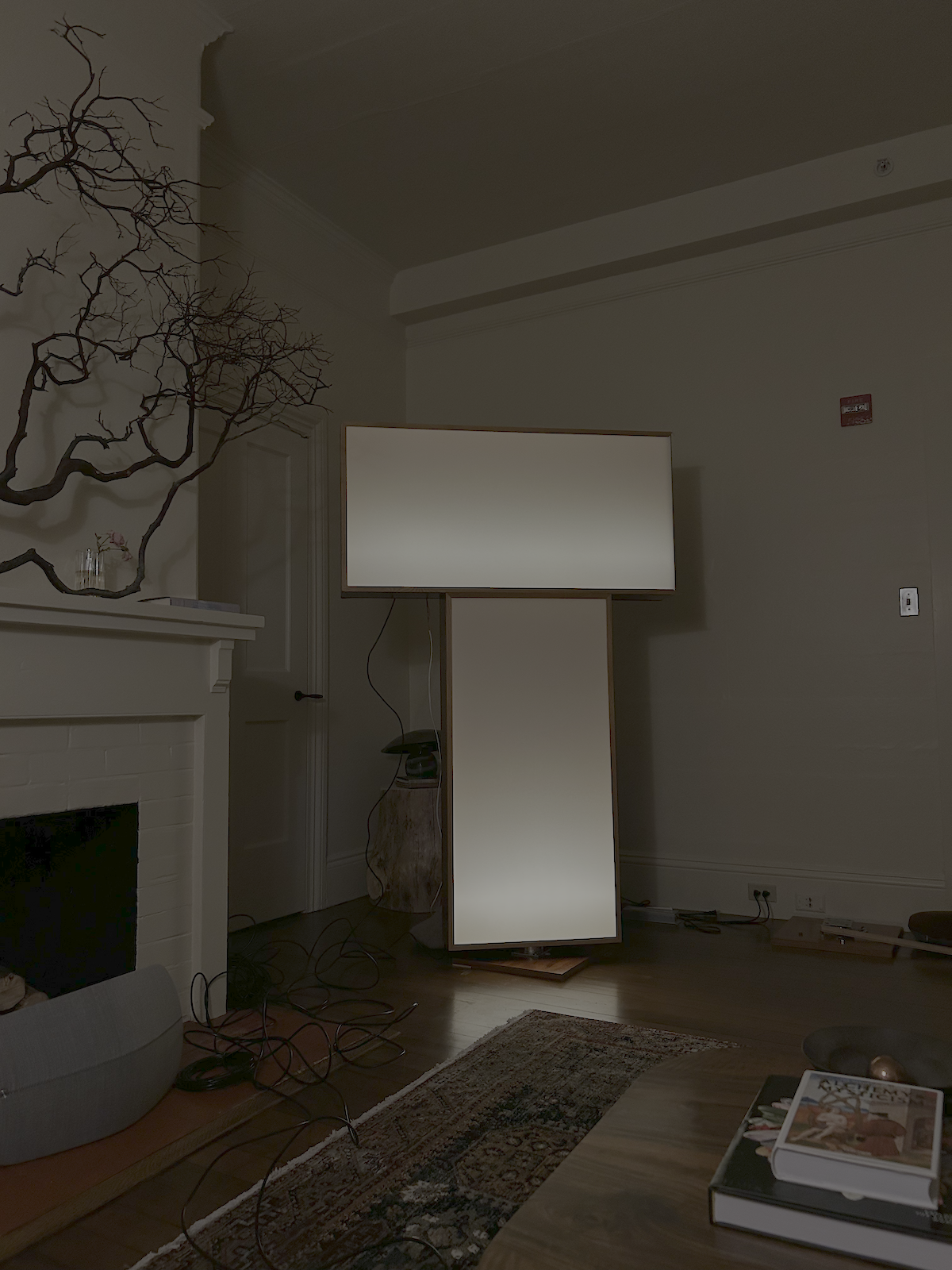
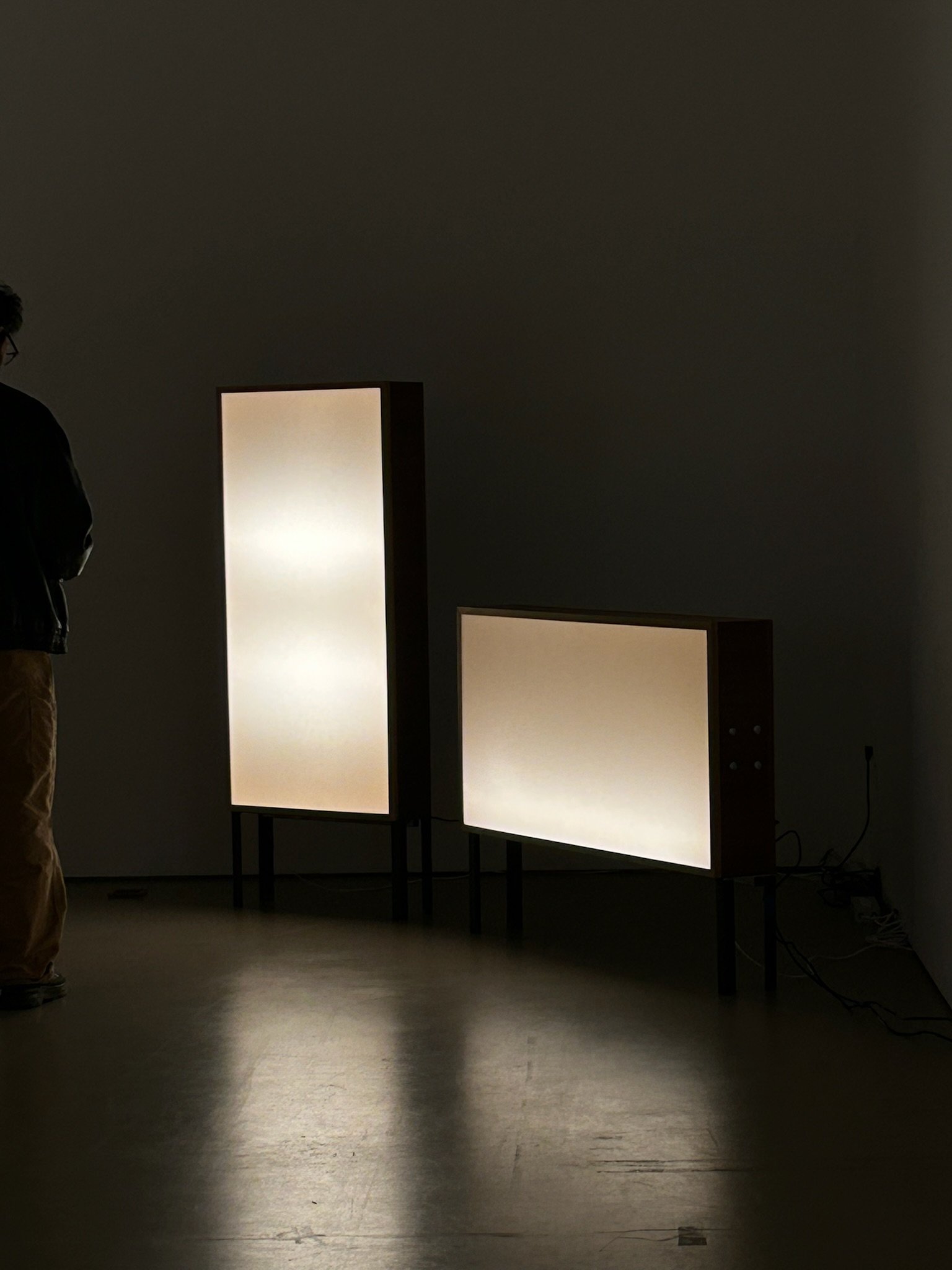

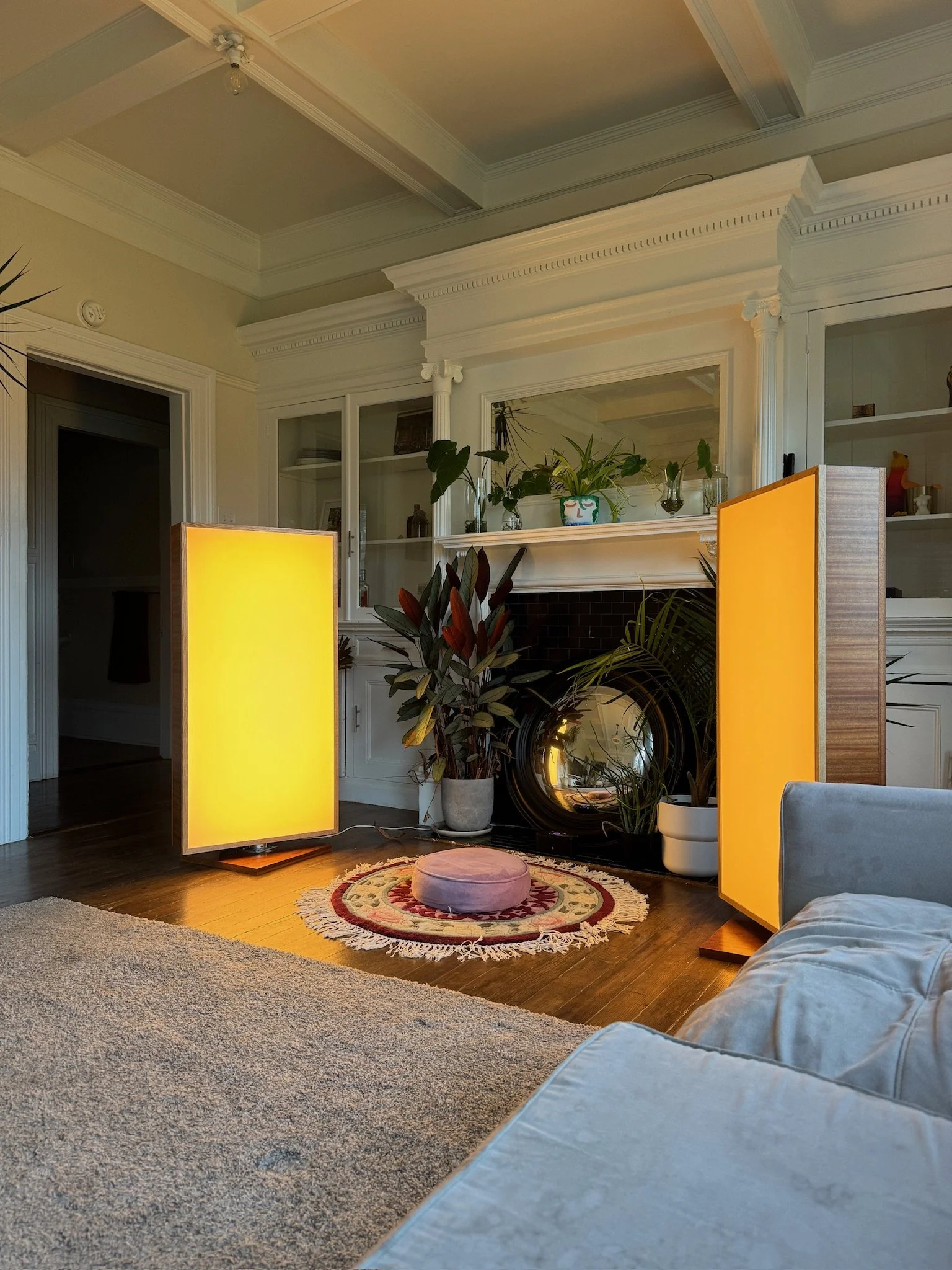
Lightboxes began from the observation that diffuse light - when controlled dynamically - can capture both the “space-filling” aspect of light (characteristic of architecture, in which light is what fills the space; or more broadly, of light providing illumination for surfaces and objects), as well as the “primary object” aspect of light (characteristic of lamps, lasers, and LED art, in which one looks at the light as a form unto itself).
In this video, Lightboxes are controlled in realtime by the person’s breathing, using the TOTEM breath-tracking app on an iPhone.
The original prototype Lightboxes were developed for an art show where every installation was breath-responsive, using a mobile phone-based breath tracker I developed called TOTEM. The interaction was simple: the breath phase would control the brightness of the Lightbox. From watching people use the installation, it became clear that slowly-changing diffuse light has intimate and emotional qualities.
Drawing on this inspiration, I developed the Lightboxes further so that the LEDs in the Lightboxes could be individually dimmed with no visible flicker or stepping at any brightness level; a technical detail that opened up a realm of ethereal, sentimental, even spiritual expression.
With this in place, I needed a way to actually create light sequences. I wanted a tool that felt more like a DAW, or choreographing a dance, writing code. For years I’ve been drawn to the relationship between movement and meaning: through dance, abstraction in 2D and 3D, and even through the study of “metaphors” in language. With all this in mind, I developed light design software called Nuance, built to enable creating nuanced light scores using a “curve-first” creative approach.
This is Nuance, a tool for scoring lights. Nuance is a curve-first timeline editor. Curves can be mapped onto various effects for any fixture (or lights within fixtures). Nuance drives Lightboxes in realtime. Scores can be rendered for playback via an installation management device such as a Raspberry Pi, with score management via the Nuance Score Platform.
Lightbox previs in Blender, controlled in realtime by Nuance. The configuration of Lightboxes shown in the rendering is a dance performance stage design concept.
Nuance is now turning into a bigger tool and platform, exploring the philosophical and artistic premise of curve-first creations: what kinds of creations and aesthetics emerge when I think about creating principally in terms of curves? “Curve” as the “animating force” that controls light, sound, or things more abstract.
Lightboxes, as physical objects, are sculptural. I’m exploring larger-scale sculptures that diverge from “boxes”, which are called Lightforms. I’m also exploring modular compositions of multiple Lightboxes intended for performance – in particular, I’m working towards directing dance-and-light pieces, where the lights are characters and dancers unto themselves.
The work with Lightbox and Lightforms is moving towards site-specific sculpture, multimedia narrative, live performance.
The Lightboxes have been developed together with Iván Langesfeld under the moniker AND THE SUN.